
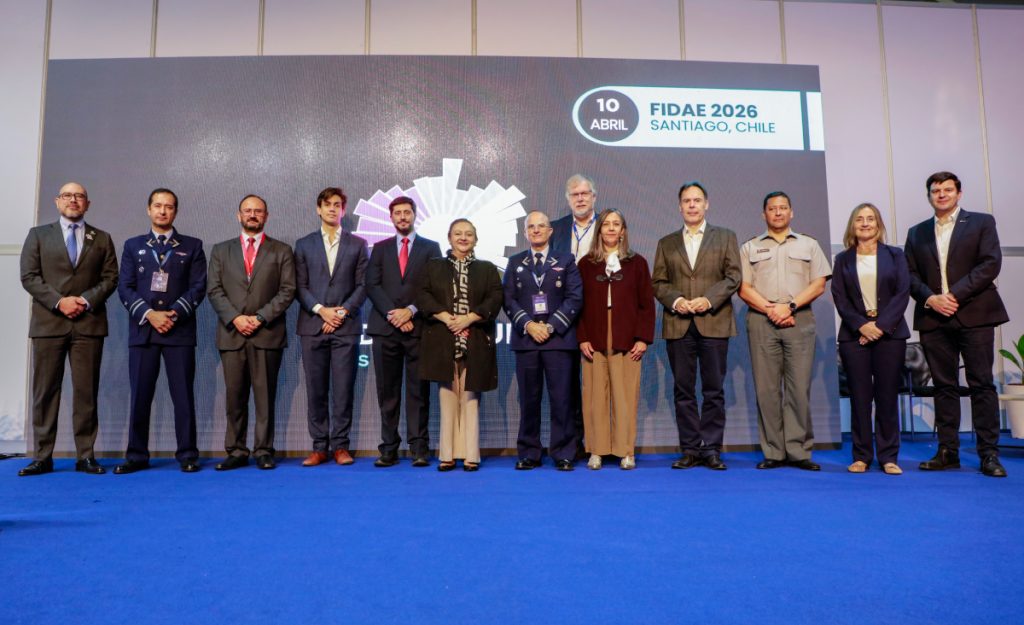
The event, organized by Know Hub Chile, brought together the armed forces, academia, industry, and the public sector at Latin America’s premier aerospace and defense gathering, marking a milestone in the coordination of capabilities to enhance strategic independence and autonomy.
As part of FIDAE 2026, Know Hub Chile held the fourth edition of the Dual Hub Summit on April 10, an event that brought together in a single venue stakeholders who have historically been disconnected from the national ecosystem, including the Armed Forces, academia, industry, startups, and three areas of public policy: the economy (industrial development), defense, and science, technology, innovation, and research (STIR).
With more than 200 attendees, the event established itself as a forum where dual-use innovation—which integrates developments with applications in both civilian and defense sectors—is beginning to emerge as a strategic priority for the country.
International reach
The Dual Hub Summit took place against an international backdrop marked by geopolitical volatility, trade tensions, and the restructuring of global supply chains, where countries’ ability to develop their own technologies has become a critical factor in safeguarding their autonomy and strengthening their strategic resilience.
The event featured Alejandra Pizarro, National Director of ANID; Air Force Brigadier General Milton Zablah, Director of Planning and Doctrine for the Chilean Air Force; Wim de Klerk, Director of Business for Latin America at TNO from the Netherlands; and Raul García, Head of Dual Programs at Spain’s CDTI. Also present were Pablo Rojas, Director of Architecture and Infrastructure for Latin America at Oracle; Diego Khamis, Legal Manager at CKSA; Oscar Bustos, Head of the Division of Technological Development and Industry at the Ministry of Defense; Elizabeth Zapata, Director of Technological Development at Corfo and Executive Director of the Corfo Shipbuilding Committee; and Carlos Ladrix, Deputy Director of Applied Research at ANID.
The choice of FIDAE as a platform was no accident. With more than four decades of history, the trade show has established itself as the leading aerospace and defense gathering in Latin America. Holding this summit within that context made it possible not only to showcase local technological capabilities but also to promote them to international markets, thereby strengthening the link between the scientific community and strategic demand.
Dual innovation as a strategic focus
During the event, key challenges for the development of the ecosystem were addressed. These included adapting to a multi-domain operational environment—encompassing land, sea, air, space, and cyberspace—the need to build trust between the defense and academic communities, and the benefits of establishing long-term roadmaps that provide stability for research and development projects. The role of emerging technologies, such as artificial intelligence, in decision-making within complex and degraded environments was also discussed.
Speaking on behalf of the organization, Javier Ramírez, executive director of Know Hub Chile, highlighted the unprecedented nature of the event and its impact on building trust across sectors. “Increasing the country’s independence and strategic sovereignty is one of the central objectives of this initiative,” he said. In that vein, he highlighted the significance of the event: “We have been promoting this agenda for several years, and seeing all these stakeholders engaging in dialogue here today is a tremendous success and a source of pride.”
During this meeting, the Chilean Air Force (FACH) announced the creation of the National Continuous Aerospace Development Program, an initiative aimed at strengthening the country’s strategic capabilities in this field. In this regard, Air Force Brigadier General Milton Zablah, Director of Planning and Doctrine for the FACH, emphasized that the availability of solutions on the international market has decreased, forcing countries to strengthen their own capabilities. “The challenge is to align the capabilities developed in academia and industry in the service of national defense,” he noted.
Institutional support for this vision also came from the National Agency for Research and Development (ANID), represented by its director, Alejandra Pizarro, who highlighted the progress represented by this level of coordination, the result of years of designing public policies aimed at strengthening the R&D system. “Our government had a vision of securing funding for initiatives that would take us from basic research to applied research and knowledge transfer,” she stated. She also emphasized that the challenge now is to broaden the base of stakeholders involved: “It’s about all of us speaking the same language, moving at the same pace, because the impacts can be much more powerful.”
The Dual Hub Summit demonstrated that the coordination achieved at FIDAE 2026 not only marks a turning point in cross-sector collaboration but also establishes a roadmap for advancing toward greater technological autonomy in a global environment where the ability to innovate locally has become a strategic necessity.